In addition to fundamental science research, knowledge transfer to businesses, and start-up creation, Inria's teams are developing a host of applications, often opensource, some of which are diffused globally.
Innovative technologies from research
From artificial intelligence to robotics, from simulation to mathematical proofing software and from high performance computing to the Internet of Things, Inria’s software library currently contains more than 1,500 programs, some of which boast vast communities of users.
Regularly recognised internationally, the work carried out by the institute also attains a wider reach by transferring technology to companies through the creation of start-ups or industrial partnerships with major groups. In this way, innovation within Inria helps contribute towards the creation of companies, while at the same time revitalising and enhancing the sustainability of the French and European industrial base in the digital sector.
Furthermore, by encouraging software to be made available open source, Inria helps to build a technological support structure for innovative companies. Giving entrepreneurs access to cutting edge technology and skills also provides a way of boosting innovation in France.
Lastly, the substantial number of young researchers and engineers passing through the institute helps contribute to the external dissemination of the concepts, ideas and technology developed at Inria.
Inria Academy
Learning about digital technologies and open source software
Rocq, proof by software
A "Proof Assistant", the Rocq(previously named Coq) software was created at Inria more than 30 years ago to verify computer programs and mathematical theorems. It’s a valuable tool for computer scientists who use it for verification but also as a code-writing aid. It is also popular among mathematicians, seduced by its performance.
InriaSoft - promoting the distribution of opensource software
Some software programs designed by Inria research teams and their partners lead to the set-up of consortia by InriaSoft. The aim is to develop, distribute and establish large-scale software programs, helping to create a support network for users.
MedInria is free, opensource2D/3D/4D visualisation and medical image processing software offering a wide range of functionalities for researchers and health practitioners. It has sophisticated algorithms but a very user-friendly interface.
Mmg, for a more flexible mesh of virtual objects in 3D
Created in 2004, Mmg is an opensource platform offering apps and software libraries for automatically modifying virtual-object meshing created in 3D. Developed jointly by Inria, the University of Bordeaux, Bordeaux INP, the Pierre and Marie Curie University and the CNRS, the Mmg platform is backed by an Inria consortium and a very active community of users.
OpenViBE, to easily create brain-computer interfaces
Processing electrical signals from the brain’s activity and translating them into machine commands: this is the role of brain-computer interfaces. Designed to facilitate the use of such interfaces, OpenViBE now allows you to design, test and easily use brain-computer interfaces. It offers a tool that is simple to access and use, aimed at researchers, clinicians and even videogame developers.
Pharo, the universal platform
An opensourcesoftware development platform that is simple and stable, adaptable to any development mission, even the most critical: that's the role of Pharo. The Pharo consortium brings together a highly diverse community of users along with firms such as Synectic, Thales and Lifeware, as well as academic stakeholders such as the Faculty of Information Technology of Prague (Czech Republic) and Fundación Argentina de Smalltalk.
Pl@ntNet, the plant recognition application
With the PlantNet app, all you have to do to identify a plant is take a photo of it, thanks to an embedded visual recognition system! This is a participative platform for the production, aggregation and dissemination of botanical observations born from the collaboration of four research bodies – Cirad (Centre for International Cooperation in Agronomic Research for Development), Inra (National Institute for Agronomic Research), IRD (Development Research Institute), and Inria.
Scikit Learn, the toolbox for machine learning
Scikit-Learn is a free library developed in Python, a high-level programming language. It is dedicated to machine learning and can be used as middleware, with applications in fraud and spam prevention, targeted marketing, forecasting user behaviour, and optimising industrial and logistics processes.
Shanoir, in the service of neuroimaging
Shanoir (SHAring NeurOImaging Resources) is an opensource solution for sharing, finding and visualising neuroimaging data. It offers secure web access and an intuitive workflow to facilitate the collection and importation of neuroimaging data from multiple sources (CD/DVD Dicom, network, existing files, etc.). This allows researchers to run research projects with quality controls that involve remote collaboration.
Modelling the human body with SOFA
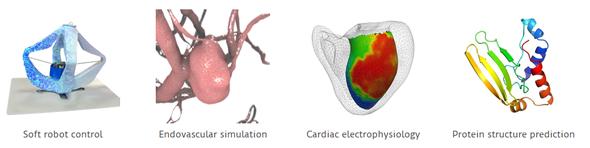
Modelling physical object systems and how they evolve is the role of SOFA, a software package that now incorporates a large number of models and algorithms, enabling fast development of new simulations. Its areas of application encompass the life sciences with a large number of medical applications, as well as industrial robotics and videogames.
Software Heritage
Launched in 2016, the goal of the Software Heritage project is to archive all the source code created by human beings in order to preserve it for the future. The brainchild of research scientists Roberto Di Cosmo and Stefano Zacchiroli in 2014, this project is supported by Unesco and operates thanks to partnerships with Microsoft, DANS, Société Générale, Intel Huawei, Nokia Bell Labsand the University of Bologna. By creating a universal and sustainable archive of source code, Software Heritage aims to build an essential infrastructure serving science, industry, and society.
VIdjil supports high-throughput sequencing
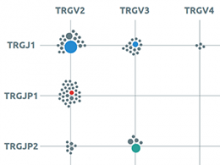
Vidjil analyses high-throughput DNA sequencing data from lymphocytes described in the lymphocyte repertoire. The software allows enhanced diagnosis and monitoring of leukaemia and is used more generally in haematology and immunology research.